


Perzix Daily Market Brief: The Signal Beneath the Chip Selloff | “06 25, 2026”
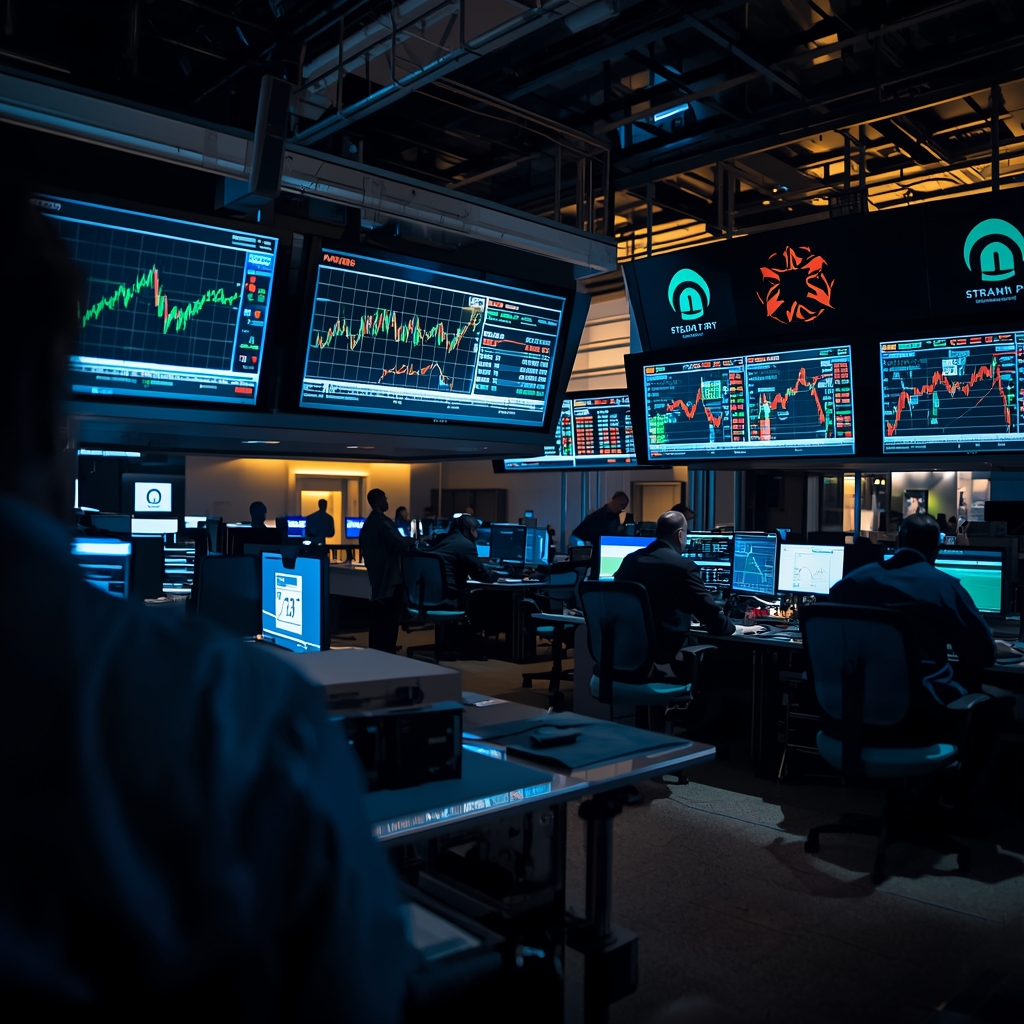
The day’s market mood shifted from broad confidence to leadership anxiety. U.S. equity futures weakened as a semiconductor-driven selloff spread globally, with South Korea’s KOSPI under sharp pressure and tech names setting the early tone. The core signal is not that investors suddenly abandoned artificial intelligence, but that the market is testing how much risk is concentrated in the chip supply chain.
Quick Take: The chip selloff is a reminder that when market leadership narrows around one powerful theme, even a regional shock can become a global risk-sentiment event.
What Happened Today
The main move came through equities. The primary news flow pointed to U.S. futures sliding as technology shares weakened, with semiconductor pressure spreading across regions. South Korea was the most visible stress point, with chip-heavy benchmarks and major hardware-linked names weighing on sentiment. The reaction was not isolated: Asian equities, U.S. futures, and parts of the global technology complex all reflected the same concern.
That matters because semiconductors have become more than a sector. They sit at the intersection of AI infrastructure, cloud capital expenditure, advanced manufacturing, national security, and export policy. A selloff in chips therefore carries a heavier message than an ordinary industry rotation. It asks whether investors are still willing to pay peak valuations for companies tied to a very large, very profitable, but increasingly crowded growth narrative.
Other signals added texture. The yen continued to whipsaw around sensitive levels against the dollar, while the dollar strengthened against the Swiss franc after the Swiss National Bank cut interest rates to 0.5%. Oil had recently eased on signs of more constructive U.S.-Iran communication, but the latest commodity series still shows WTI at an elevated monthly level of $102.13 for May. Bitcoin was quoted near $59,577, leaving digital risk appetite stable but not euphoric.
Politics Into Prices
The political driver here is not a single headline from parliament or a central bank podium. It is the larger policy architecture around semiconductors. Chips are now treated as strategic assets: governments subsidize domestic capacity, restrict sensitive exports, monitor supply-chain exposure, and view advanced compute as part of national power. That makes the sector unusually sensitive to policy probability, not just quarterly earnings.
The transmission is straightforward. Political concern about technology sovereignty leads to industrial policy, export controls, and supply-chain localization. Those policies affect where capacity is built, which companies can sell into which markets, how fast capital expenditure rises, and how much redundancy firms must carry. Investors then translate those changes into margins, discount rates, and valuation multiples. A chip selloff is therefore partly an earnings story, partly a geopolitics story, and partly a capital-allocation story.
Central banks are also part of the map. The SNB’s rate cut and the dollar’s move against the franc highlight a broader theme of policy divergence. If some central banks are easing while the Federal Reserve remains cautious, currency volatility can amplify equity moves. For multinational technology firms, exchange rates are not background noise; they affect reported revenue, imported cost structures, and investor appetite for duration-heavy growth assets.
Why It Matters
For much of the recent equity advance, semiconductor leadership gave investors a clean story: AI demand supports chip revenue, chip revenue validates infrastructure spending, and infrastructure spending keeps the growth trade alive. The weakness in that chain does not prove the story is broken. It does, however, reveal that the market has less room for disappointment when expectations are already high.
The useful historical parallel is the 2018 semiconductor downturn. Then, memory weakness, inventory adjustments, and trade-policy friction forced investors to reassess whether chip demand was cyclical or structural. The comparison is not perfect; today’s AI infrastructure buildout is broader and more strategically important. But the lesson is similar: even transformative technologies move through inventory cycles, valuation cycles, and policy cycles.
This is why leadership concentration matters. A diversified index can look healthy while its risk is increasingly dependent on a small number of crowded assumptions. If those assumptions wobble, passive portfolios, factor strategies, and momentum trades can all react in the same direction. The selloff becomes less about one company and more about the market’s dependence on a narrow engine of returns.
Business / Investor Lesson
Executives should read the day less as a verdict on AI and more as a warning about planning around perfect capital markets. When investors reward a theme aggressively, suppliers expand capacity, customers accelerate procurement, and competitors rush to signal exposure. That can create real opportunity, but it can also pull demand forward and raise execution risk.
For founders and operators, the practical lesson is to separate strategic demand from financing conditions. A customer may still need compute, chips, software, or infrastructure, but the price they are willing to pay can change if equity markets cool and funding committees become more cautious. Sales pipelines tied to hot investment themes should be stress-tested for budget delays, contract repricing, and tougher procurement reviews.
Investors face a parallel discipline. Owning the best companies in a powerful theme is not the same as owning low risk. High-quality assets can still suffer when positioning is crowded and expectations leave little margin for error. The better question is not whether AI remains important, but whether the current price already assumes flawless execution across supply, demand, regulation, and capital spending.
Term / Trend Focus
Today’s term is concentration risk. It describes the danger that a portfolio, index, business model, or strategy depends too heavily on one source of return. Concentration is not always bad. Many great businesses are built by focusing resources on one exceptional opportunity. The problem appears when the market forgets that focus increases sensitivity.
In portfolio terms, concentration risk can hide inside broad exposure. An investor may own an index fund and believe they are diversified, while the index’s performance increasingly depends on a small cluster of technology and semiconductor-linked companies. In business terms, concentration risk can appear when revenue depends on one customer group, one geography, one supplier, or one funding environment.
The discipline is not to avoid concentration entirely. It is to know what would hurt if the dominant assumption changes. At Perzix, we focus on that transmission because the most important market lessons often arrive before the headline narrative changes.
Market Snapshot
Equities are sending the clearest risk-off signal. U.S. futures weakened as technology shares came under pressure, while South Korea’s chip-heavy market showed the most acute stress. The Nikkei was described as volatile rather than uniformly weak, suggesting investors are differentiating across Asian exposure rather than selling the region mechanically.
Currencies added another layer. USD/JPY remained choppy, which matters because yen instability often feeds back into global risk appetite and hedging behavior. The dollar’s 0.5% move to 0.8890 francs after the Swiss National Bank cut rates underscores that policy divergence is still capable of moving capital quickly.
Bitcoin near $59,577 is not confirming a full panic in speculative assets, but it is also not leading a broad risk-on push. Gold should be watched as the cleaner safe-haven benchmark in this setup: if chip weakness deepens while gold demand rises, the market would be shifting from sector rotation toward defensive hedging. Oil remains a separate inflation channel, with the latest monthly WTI reading at $102.13 even as recent news pointed to softer crude on constructive U.S.-Iran signals. The cross-asset message is that leadership risk, not energy panic, is setting the tone.
What Perzix Is Watching Next
The base case is that this remains a valuation and positioning reset within a still-important semiconductor and AI cycle. In that scenario, investors rotate within technology, reward balance-sheet strength, and demand more proof before paying peak multiples again.
The stress case is broader. If chip weakness spreads into credit, currencies, and capital-expenditure guidance, the market may begin treating semiconductor pressure as an early warning about global growth expectations rather than a sector-specific correction. That would make the next round of earnings commentary more important than the next intraday bounce.
The invalidation signal would be a firm recovery in semiconductor leadership accompanied by calmer Asian equities, steadier USD/JPY, and no meaningful bid for defensive hedges. That combination would suggest the selloff was a crowded-position shakeout rather than the start of a deeper repricing.
The immediate watchpoint is whether buyers return to chip leadership selectively or whether selling broadens into the companies that depend on AI capital expenditure. The distinction matters. Selective repair keeps the growth story intact. Broad pressure would tell executives and investors that the market is starting to question not the promise of AI, but the price already paid for it.
🇪🇸 Resumen en Español
La cápsula de hoy interpreta la caída liderada por semiconductores como una señal de riesgo de concentración, no como un rechazo definitivo a la inteligencia artificial. La presión sobre Corea del Sur y los futuros estadounidenses muestra cuánto depende el mercado de una narrativa estrecha: chips, centros de datos, gasto de capital y política industrial. El artículo explica cómo las decisiones sobre exportaciones, subsidios y seguridad tecnológica afectan márgenes, valoraciones y divisas. Bitcoin cerca de 59.577 dólares no confirma pánico, mientras el oro sigue siendo el refugio clave a vigilar.
🇨🇳 中文摘要
今天的市场胶囊将芯片板块引发的抛售解读为集中度风险,而不是人工智能投资主题的终结。韩国股市承压,美国股指期货走弱,说明全球风险偏好仍高度依赖半导体、数据中心资本开支和政策支持这条链条。文章解释了出口管制、产业补贴和技术安全政策如何传导到利润率、估值和汇率。比特币约为59,577美元,尚未显示全面恐慌;黄金则仍是观察防御性需求是否升温的关键指标。
🇷🇺 Краткое резюме
Сегодняшний выпуск рассматривает распродажу в полупроводниках как сигнал риска концентрации, а не как конец истории искусственного интеллекта. Давление на рынок Южной Кореи и слабость фьючерсов США показывают, насколько сильно глобальные акции зависят от узкой цепочки: чипы, дата-центры, капитальные расходы и промышленная политика. В статье объясняется, как экспортные ограничения, субсидии и технологическая безопасность переходят в маржу, мультипликаторы и валюты. Bitcoin около 59 577 долларов не указывает на панику, а золото остается ключевым защитным индикатором.
🇸🇦 ملخص بالعربية
تقرأ كبسولة اليوم تراجع أسهم أشباه الموصلات بوصفه إشارة إلى مخاطر التركّز، لا نهاية لقصة الذكاء الاصطناعي. الضغط على سوق كوريا الجنوبية وضعف العقود الأميركية يبرزان اعتماد المزاج العالمي على سلسلة ضيقة: الرقائق، مراكز البيانات، الإنفاق الرأسمالي، والسياسة الصناعية. يشرح المقال كيف تنتقل قيود التصدير والدعم الحكومي وأمن التكنولوجيا إلى الهوامش والتقييمات والعملات. بقاء Bitcoin قرب 59,577 دولاراً لا يشير إلى ذعر شامل، بينما يبقى الذهب مقياس الملاذ الآمن الذي يجب مراقبته.
🇫🇷 Résumé en Français
La capsule du jour interprète la vente des semi-conducteurs comme un signal de risque de concentration, et non comme la fin du thème de l’intelligence artificielle. La pression sur la Corée du Sud et la faiblesse des contrats à terme américains montrent combien le marché dépend d’une chaîne étroite : puces, centres de données, dépenses d’investissement et politique industrielle. L’article explique la transmission des contrôles à l’exportation, des subventions et de la sécurité technologique vers les marges, les valorisations et les devises. Bitcoin près de 59 577 dollars ne confirme pas une panique généralisée; l’or reste le refuge à surveiller.

Perzix Daily Market Capsule: When Oil Becomes the Market’s Trigger Level
Markets are no longer reacting to headlines alone—they are reacting to a level. As oil approaches

Perzix Daily Market Brief: The Chip Shock Behind the Payrolls Test | “07 3, 2026”
A sharp South Korean equity selloff put semiconductor concentration back in focus just as U.S. payro
Perzix Daily Market Intelligence: When Markets Send Conflicting Signals
Equities are climbing on geopolitical optimism, but oil, bonds, and semiconductors tell a different

Leave a Reply