

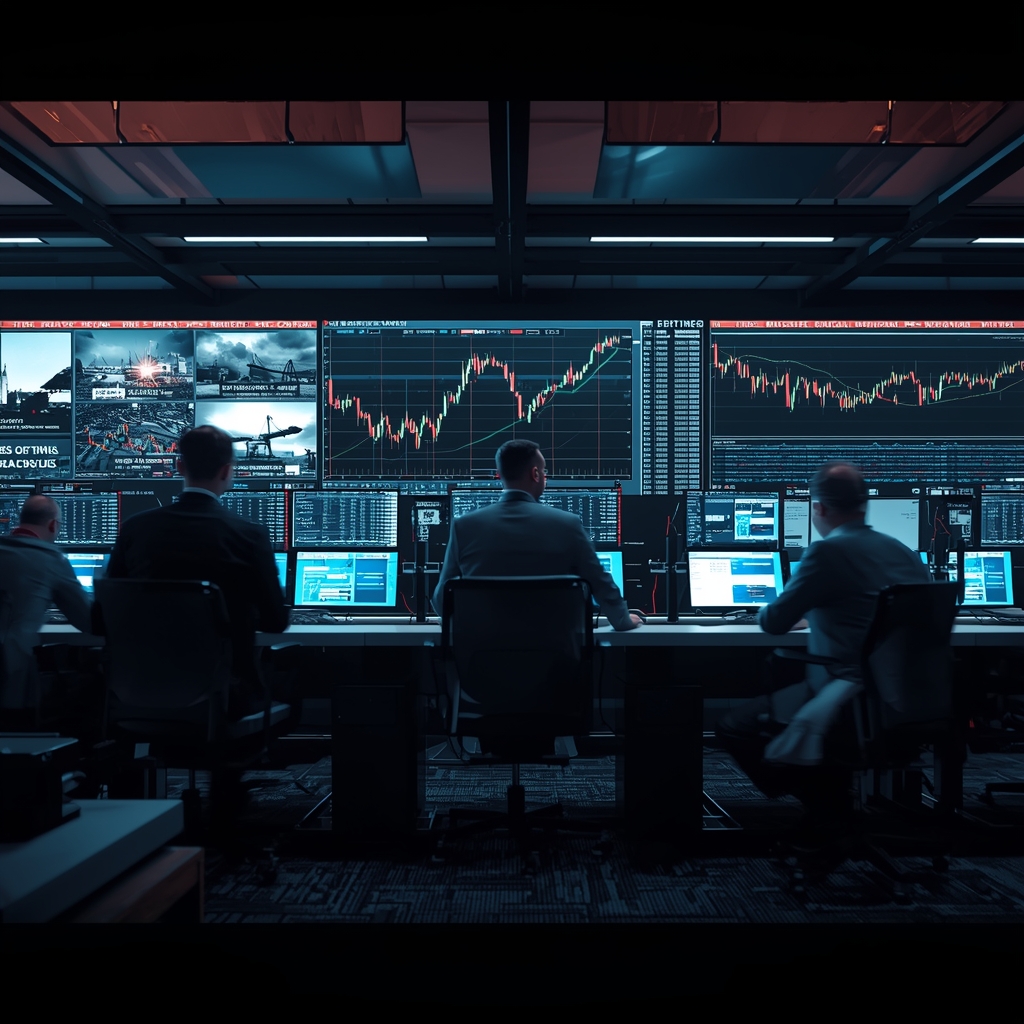
Perzix Daily Market Intelligence: When Headlines Lose Pricing Power
The market is no longer reacting to headlines—it is reacting to how believable those headlines feel. That shift is subtle, but it is now driving price action more than the events themselves.
Quick Take: Violent swings in oil and equities reflect not just geopolitical risk, but a growing credibility discount investors are applying to fast-changing political narratives.
What Happened Today
Markets moved sharply again as optimism around a US–Iran ceasefire quickly faded. Oil prices rebounded after an earlier plunge, while equity futures slipped, reversing part of the prior relief rally. The same catalyst—ceasefire expectations—produced opposite market reactions within days.
This is not just volatility. It is inconsistency. Energy markets are repricing supply risk in real time, while equities struggle to anchor around a stable macro narrative. Even within a narrow window, the market has traded both a de-escalation scenario and a renewed conflict premium.
Meanwhile, secondary macro signals—such as a rate cut from the Swiss National Bank and a firmer dollar—suggest that global policy and currency markets are adjusting to uncertainty rather than reacting to a single dominant outcome.
Politics Into Prices
The political sequence is straightforward: ceasefire headlines emerge, optimism builds, then doubts surface, and pricing reverses. But the transmission into markets has changed.
Previously, geopolitical developments tended to produce directional moves—risk-on or risk-off. Now, the same headline category is generating two-way volatility because investors are questioning durability, not just direction.
That shift introduces a new layer in the pricing mechanism: credibility. A ceasefire is no longer priced as a binary event. Instead, it is discounted based on perceived stability, enforcement, and political incentives on both sides.
The result is shorter market half-lives for any given narrative. Oil spikes do not hold. Equity rallies fade faster. Safe-haven flows become more tactical than structural.
Why It Matters
When credibility declines, volatility rises—even if the underlying situation has not fundamentally worsened. Markets begin to trade the probability of reversal rather than the probability of resolution.
This has two important consequences. First, correlations become less reliable. Oil and equities may move together briefly, then diverge as different participants assign different probabilities to the same event.
Second, time horizons compress. Investors are less willing to hold positions based on political outcomes that may shift within hours. This favors shorter-duration trades and penalizes conviction-driven positioning.
The deeper implication is that markets are transitioning from event-driven pricing to narrative-driven discounting. That is a more unstable regime.
Business / Investor Lesson
For executives and allocators, the key mistake in this environment is treating headlines as decision anchors.
When narrative credibility is low, reacting directly to each development increases the risk of over-adjustment—changing pricing, hedging, or capital allocation too frequently. Instead, decisions should be based on scenario ranges, not single outcomes.
In practical terms, that means stress-testing operations and portfolios across multiple paths: sustained conflict, fragile ceasefire, and rapid de-escalation. Businesses with flexible cost structures and diversified exposure will outperform those optimized for a single geopolitical assumption.
This is where disciplined frameworks—like those often emphasized in Perzix research—become critical. The edge is not predicting the next headline, but managing the range of outcomes it implies.
Term / Trend Focus
Credibility Discount refers to the reduction in market impact assigned to a headline or policy signal due to doubts about its durability or reliability.
In stable environments, markets respond strongly to official announcements because they are assumed to be actionable and lasting. In unstable geopolitical conditions, that assumption breaks down.
As a result, prices move less on initial news and more on confirmation—or reversal. This creates choppier trading patterns and reduces the predictive value of any single headline.
Understanding this concept helps explain why large moves are quickly retraced and why markets appear indecisive despite significant news flow.
Market Snapshot
Oil has become the fastest-reacting asset, swinging sharply as ceasefire expectations rise and fall. Equities are following, but with less conviction, reflecting uncertainty about the broader economic spillover.
The dollar’s strength points to a mild defensive tilt, while central bank actions like the Swiss rate cut reinforce the idea that policymakers are preparing for uneven global conditions.
Gold and Bitcoin data are limited in precision today, but directionally, both are behaving more like tactical hedges than dominant safe havens—failing to establish a clear, sustained trend amid the noise.
The cross-asset message is clear: markets are not pricing outcomes—they are pricing the reliability of the story.
What Perzix Is Watching Next
The base case is continued headline-driven volatility with diminishing follow-through, as markets demand confirmation before committing to a directional view. In this scenario, oil remains reactive and equities trade in unstable ranges.
The stress case is a definitive geopolitical escalation that restores directional conviction—likely pushing oil higher in a sustained move and triggering a broader risk-off shift across equities and credit.
The invalidation signal would be a ceasefire that holds long enough to rebuild credibility. If markets begin to extend moves rather than reverse them, it would indicate that narrative trust is returning.
Until then, the signal beneath the noise is not the event—it is how much the market believes it.
In this environment, credibility has become a tradable variable. And right now, it is in short supply.
🇪🇸 Resumen en Español
Los mercados están reaccionando menos a los titulares y más a su credibilidad. Las noticias sobre un alto el fuego entre EE. UU. e Irán provocaron movimientos opuestos en pocos días: primero alivio y luego caída. Este patrón revela un “descuento de credibilidad”, donde los inversores dudan de la duración de los eventos políticos. Como resultado, aumenta la volatilidad, se acortan los horizontes de inversión y las tendencias pierden fuerza. El petróleo reacciona más rápido, mientras las acciones muestran menor convicción. La lección clave es operar con escenarios, no con titulares aislados. El mercado está valorando la fiabilidad de la narrativa, no solo los hechos.
🇨🇳 中文摘要
市场不再单纯对地缘政治新闻做出反应,而是开始评估这些新闻的可信度。美伊停火消息在短时间内引发了相反的市场走势:先是风险偏好上升,随后迅速逆转。这表明投资者正在应用“可信度折价”,对政策或事件的持续性产生怀疑。结果是波动性上升、持仓周期缩短、趋势难以延续。油价反应最快,股市则缺乏方向性。关键启示是基于多情景决策,而非单一新闻。当前市场真正定价的不是事件本身,而是叙事的可靠性。
🇷🇺 Краткое резюме
Рынки перестают реагировать на сами заголовки и начинают оценивать их достоверность. Новости о перемирии между США и Ираном вызвали противоположные движения за короткое время: сначала рост, затем падение. Это отражает «дисконт доверия», когда инвесторы сомневаются в устойчивости событий. В результате усиливается волатильность, сокращаются горизонты инвестиций и снижается устойчивость трендов. Нефть реагирует быстрее всего, акции — менее уверенно. Главный вывод: принимать решения на основе сценариев, а не отдельных новостей. Сейчас рынок оценивает не события, а надежность нарратива.
🇸🇦 ملخص بالعربية
لم تعد الأسواق تتفاعل مع العناوين الإخبارية بقدر ما تقيم مدى مصداقيتها. أخبار وقف إطلاق النار بين الولايات المتحدة وإيران أدت إلى تحركات متعاكسة خلال فترة قصيرة، ما يعكس ظهور “خصم المصداقية” لدى المستثمرين. هذا الشك في استمرارية الأحداث يزيد من التقلبات ويقصر آفاق الاستثمار ويضعف الاتجاهات. النفط يتفاعل بسرعة، بينما الأسهم تظهر ترددًا. الدرس الأساسي هو الاعتماد على سيناريوهات متعددة بدلًا من التفاعل مع كل خبر. الأسواق الآن تسعر موثوقية الرواية وليس الحدث نفسه.
🇫🇷 Résumé en Français
Les marchés ne réagissent plus seulement aux annonces, mais à leur crédibilité. Les nouvelles sur un cessez-le-feu entre les États-Unis et l’Iran ont provoqué des mouvements opposés en quelques jours, révélant un « discount de crédibilité ». Les investisseurs doutent de la durabilité des événements, ce qui accroît la volatilité et réduit les horizons d’investissement. Le pétrole réagit rapidement, tandis que les actions manquent de conviction. La leçon clé est de raisonner en scénarios plutôt qu’en réactions aux titres. Le marché valorise désormais la fiabilité du récit autant que les faits.
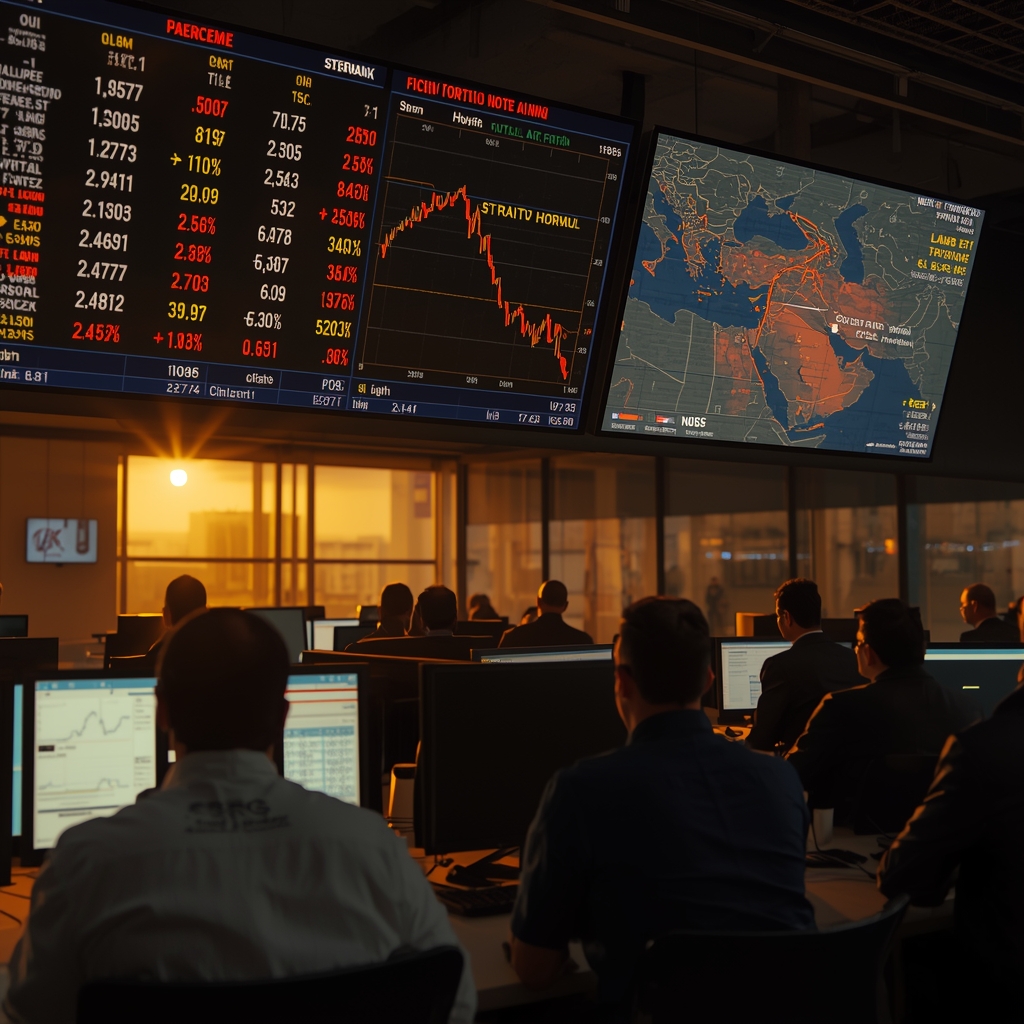
Perzix Daily Market Capsule: When Oil Breaks the Fear Feedback Loop
Falling oil prices and rising futures signal a shift: markets are no longer reinforcing geopolitical

Perzix Daily Market Intelligence: When Headlines Lose Their Half-Life
Markets are still moving on geopolitical headlines—but less than before. The real shift is in how

Perzix Daily Market Capsule: The Calm Before Concentrated Risk
Equities are holding near highs while semiconductors extend gains, but the real story is how much ri

Leave a Reply