


Perzix Daily Market Brief: The Margin Signal Beneath the Oil Drop | “06 15, 2026”
The first market reaction looked simple: stocks up, oil down, fear lower. The more important signal is less dramatic and more useful for decision-makers. A geopolitical headline is being translated into balance-sheet math: lower expected energy costs, less inflation anxiety, easier financial conditions, and a renewed bid for risk assets.
Quick Take: The US-Iran de-escalation trade is no longer just about oil; it is becoming a test of whether lower input-cost pressure can support margins, multiples, and policy flexibility.
What Happened Today
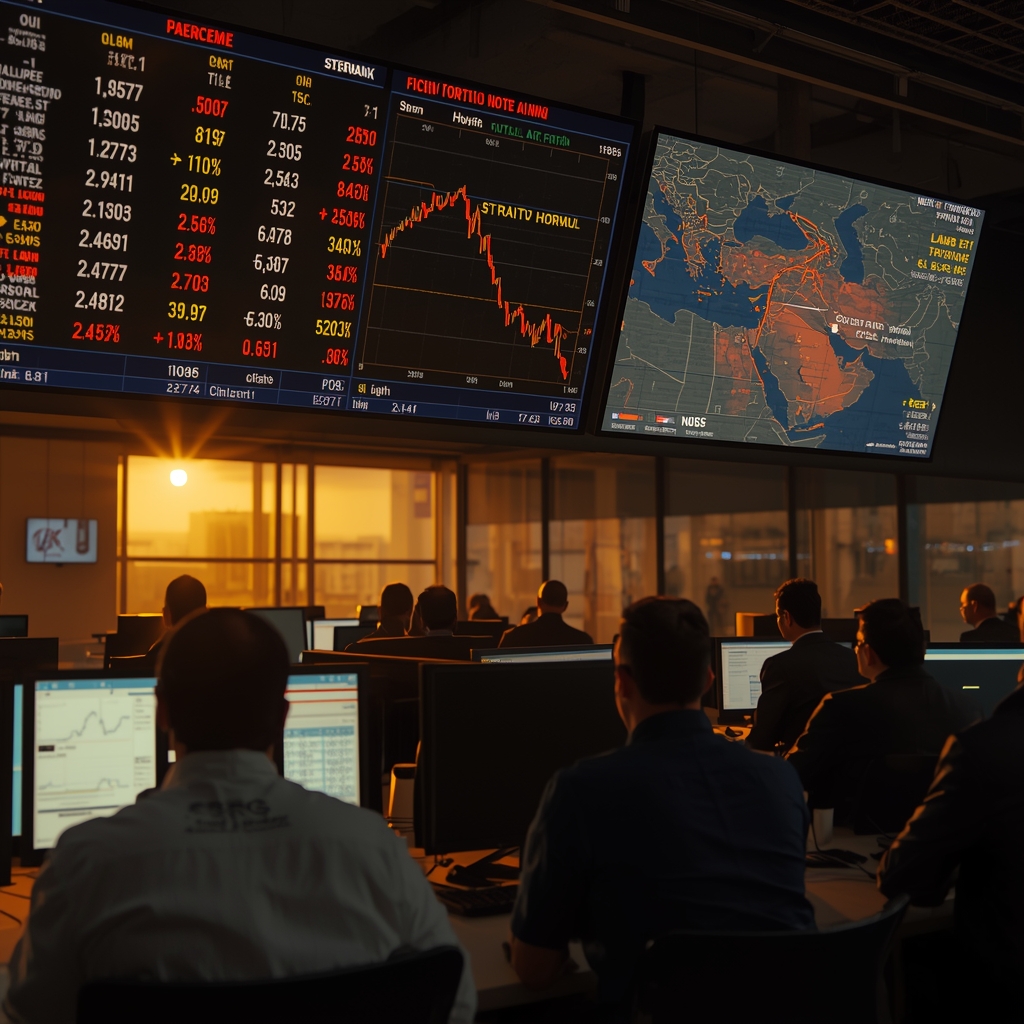
Global markets moved firmly into risk-on mode after reports of a US-Iran deal. US equity futures and global stocks rallied, major technology names were indicated higher, and oil fell sharply, with the raw news feed describing crude as tumbling to the lowest level in months. Bonds also caught a bid, suggesting that investors were not merely rotating from energy into equities; they were also marking down the probability of a renewed inflation shock.
The move should be read as a repricing of consequences, not simply a celebration of one diplomatic headline. The market had been carrying a premium for potential supply disruption, Middle East escalation, higher shipping risk, and renewed pressure on consumer energy costs. When that premium falls, the transmission is broad: airlines, logistics firms, manufacturers, retailers, and households all receive some degree of relief, while energy producers lose part of the scarcity premium that had supported prices.
Secondary policy signals added texture. The Swiss National Bank cut rates by half a point to 0.5%, while the dollar jumped against the franc. Germany’s flash manufacturing PMI improved to a four-month high of 43.2, although it remained contractionary. Those details matter because they show a world still looking for growth support, not an economy overheating into the oil decline.
Politics Into Prices
The political event is the reported US-Iran de-escalation. The market mechanism is straightforward: reduced conflict probability lowers the expected chance of supply disruption; lower disruption risk reduces the energy shock premium; a softer oil path eases near-term inflation fears; lower inflation pressure gives central banks more room to lean toward accommodation or patience; easier financial conditions then support equities and credit.
That chain is why politics can move prices even before any official policy document changes. Markets price expected behavior. If traders believe governments are less likely to stumble into escalation, businesses are less likely to face emergency fuel costs, central banks are less likely to confront another commodity-driven inflation spike, and consumers are less likely to absorb a fresh energy tax. The political headline becomes a discount-rate and earnings story.
There is also a credibility layer. A deal is worth more to markets when it appears enforceable and less when it feels like a pause between shocks. That distinction will matter in the next few sessions. Risk assets can tolerate ambiguity when oil is falling; they become less forgiving if shipping, sanctions, or military signaling contradict the diplomatic narrative.
Why It Matters
The obvious story is that oil fell. The deeper story is that a potential cost shock was removed from the front of the market’s mind. That changes how investors interpret earnings, inflation, and central-bank reaction functions. A lower oil price does not automatically create a bull market, but it can reduce one of the cleanest threats to margins and consumer spending.
For businesses, energy is rarely just one line item. It touches freight, packaging, heating, travel, petrochemical inputs, and the pricing behavior of suppliers. When oil rises quickly, companies face a difficult choice: absorb the cost and protect demand, or pass it through and risk volume weakness. When oil falls, that pressure eases. Some firms gain direct savings. Others gain negotiating leverage. Still others simply avoid a new round of customer resistance.
The historical parallel is the 1991 Gulf War oil reversal. After the initial shock, crude prices retreated sharply once markets judged that the worst supply fears were not materializing. Equities responded because investors were not only pricing cheaper fuel; they were pricing the removal of a macro overhang. The comparison is not perfect. Today’s energy system, sanctions architecture, and financial markets are different. But the lesson is durable: when a feared supply shock fades, the relief can travel much further than the commodity pit.
Business / Investor Lesson
The practical lesson is to separate headline exposure from operating exposure. A portfolio, company, or strategy may have little direct connection to the Middle East, yet still carry meaningful sensitivity to energy prices, shipping costs, inflation expectations, and rate volatility. That sensitivity is often hidden until a shock reveals it.
Executives should use days like this to stress-test procurement assumptions rather than simply celebrate lower fuel costs. If margins improve because energy falls, that is helpful, but it is not the same as structural productivity. Durable advantage comes from knowing which savings can be locked in, which should be passed to customers, and which should be reinvested into resilience. Founders and operators with variable-cost models should be especially careful: a relief rally can make fragile economics look stronger than they are.
Investors face a related discipline. Lower oil can justify higher confidence in margins and lower inflation risk, but it should not erase valuation scrutiny. The best trades after geopolitical relief are often not the most obvious beta trades. They are the companies whose cost structures, pricing power, and balance sheets convert relief into genuine earnings improvement.
Term / Trend Focus
Today’s term is input-cost beta. It describes how sensitive a company’s profitability is to changes in major operating inputs such as energy, freight, labor, or raw materials. A business with high input-cost beta benefits quickly when costs fall but suffers quickly when they rise. A business with low input-cost beta has more stable margins because its cost base is less exposed or better hedged.
This matters because markets often treat a macro relief event as if it helps all risk assets equally. It does not. A software company, airline, chemicals producer, retailer, and industrial manufacturer do not receive the same benefit from lower oil. The key question is not simply whether oil falls; it is who captures the savings. Suppliers, customers, employees, lenders, and shareholders all compete for the benefit.
Understanding input-cost beta turns a headline into a screening tool. It helps investors identify where earnings expectations may be too conservative and helps executives decide whether to hedge, renegotiate contracts, or protect cash while conditions are favorable.
Market Snapshot
The cross-asset message was broadly pro-risk. Equity futures and global stocks rallied as the reported Iran deal reduced the probability of an energy-led inflation shock. Oil weakened sharply despite the latest available monthly WTI series showing May at $102.13 per barrel, underscoring how quickly the market can discount a change in geopolitical probability. Bonds rallying alongside stocks suggests investors saw disinflation relief, not just speculative enthusiasm.
The dollar picture was more mixed. The franc weakened after the Swiss National Bank’s larger rate cut, with the dollar moving higher against it. That move was less about US exceptionalism and more about policy divergence: when one central bank cuts more aggressively, its currency can lose defensive appeal even on a risk-on day.
Bitcoin should be read through the risk-appetite lens rather than through a precise price point in today’s capsule. If it strengthens alongside equities, it would confirm that liquidity-sensitive assets are embracing the de-escalation trade. If it lags, that would imply the rally is more about lower inflation risk than broad speculative appetite. Gold serves the opposite test. If gold fades while equities rise, safe-haven demand is being unwound. If gold holds firm despite the rally, investors are keeping a hedge against diplomatic disappointment. The combined signal: markets are pricing relief, but they still want confirmation.
What Perzix Is Watching Next
At Perzix, the next watchpoint is whether the oil decline becomes a durable margin signal or remains a one-session geopolitical adjustment. The base case is that de-escalation holds long enough to keep energy risk premium lower and support a measured risk-on tone across equities and credit. That would help companies with high transport, fuel, and input exposure, while giving central banks slightly more room to avoid hawkish surprises.
The stress case is not an immediate crisis; it is a credibility break. If implementation falters, sanctions rhetoric hardens, shipping lanes look vulnerable, or crude reverses sharply, markets may rebuild the premium they just removed. In that scenario, the most exposed assets would be those that rallied on margin relief without enough earnings support.
The invalidation signal is a sustained rebound in oil accompanied by weaker equities and renewed demand for havens. That combination would suggest the market no longer trusts the de-escalation path and is rebuilding protection against a supply shock.
For now, the market has heard a cleaner message than it has in recent sessions: less energy stress means better inflation optics, better margin assumptions, and better risk appetite. The next challenge is proving that the political headline can survive contact with implementation.
🇪🇸 Resumen en Español
Los mercados globales subieron y el petróleo cayó tras informes de un acuerdo entre Estados Unidos e Irán. La cápsula sostiene que la señal clave no es solo geopolítica, sino de márgenes: menores costos energéticos reducen el riesgo inflacionario, dan más flexibilidad a los bancos centrales y mejoran el panorama para empresas expuestas a combustible, transporte e insumos. El concepto central es “input-cost beta”, o sensibilidad de las ganancias a los costos operativos. La vigilancia ahora es si la caída del petróleo se sostiene o si vuelve la prima de riesgo.
🇨🇳 中文摘要
全球股市在有关美国与伊朗达成协议的报道后上涨,油价大幅回落。本文认为,真正重要的信号不只是地缘政治缓和,而是成本与利润率的再定价。能源压力下降可减轻通胀担忧,为央行提供更多政策空间,并改善燃料、运输、包装和原材料成本较高企业的盈利预期。核心概念是“投入成本贝塔”,即企业利润对关键运营成本变化的敏感度。下一步需观察油价下跌是否转化为持久的利润率支持,还是只是短暂风险溢价回落。
🇷🇺 Краткое резюме
Мировые акции выросли, а нефть резко снизилась после сообщений о соглашении между США и Ираном. Главный сигнал, по версии капсулы, не только в геополитике, а в влиянии на маржу: более низкие энергетические риски уменьшают инфляционное давление, дают центробанкам больше пространства для маневра и улучшают ожидания для компаний с высокой долей топлива, перевозок и сырья в расходах. Ключевой термин — input-cost beta, чувствительность прибыли к операционным затратам. Следующий ориентир — станет ли падение нефти устойчивым облегчением или временной переоценкой.
🇸🇦 ملخص بالعربية
ارتفعت الأسهم العالمية وتراجع النفط بعد تقارير عن اتفاق بين الولايات المتحدة وإيران. ترى الكبسولة أن الإشارة الأهم ليست سياسية فقط، بل مرتبطة بالهوامش: انخفاض ضغوط الطاقة يقلل مخاطر التضخم، يمنح البنوك المركزية مساحة أوسع، ويحسن توقعات الشركات المعرضة لتكاليف الوقود والشحن والمواد الخام. يشرح المقال مفهوم “بيتا تكلفة المدخلات”، أي حساسية الأرباح لتغير تكاليف التشغيل. نقطة المتابعة التالية هي ما إذا كان هبوط النفط سيتحول إلى دعم مستدام للهوامش أم يبقى تعديلاً مؤقتاً في علاوة المخاطر.
🇫🇷 Résumé en Français
Les marchés mondiaux ont progressé tandis que le pétrole reculait fortement après des informations sur un accord entre les États-Unis et l’Iran. Le signal central n’est pas seulement géopolitique: il concerne les marges. Une baisse du stress énergétique réduit le risque inflationniste, donne plus de flexibilité aux banques centrales et améliore les perspectives des entreprises exposées au carburant, au transport et aux intrants. Le concept expliqué est l’« input-cost beta », la sensibilité des bénéfices aux coûts opérationnels. Le prochain test sera la durabilité de cette détente pétrolière.

Perzix Daily Market Capsule: When Volatility Becomes the Signal
Sharp swings in oil, equities, and crypto reveal a deeper shift: volatility itself is becoming the m
Perzix Daily Market Capsule: When Oil Breaks the Fear Feedback Loop
Falling oil prices and rising futures signal a shift: markets are no longer reinforcing geopolitical

Perzix Daily Market Capsule: When Diplomacy Starts Moving Prices
Equities climbed and oil retreated as markets began pricing diplomatic pathways in the Middle East.

Leave a Reply